
If you have limited time and want a road-trip-friendly volcanic landscape, choose Iceland; if you want world-class multi-day trekking and remote alpine drama, Patagonia is the winner. While both regions offer glaciers, fjords, and extreme weather, Iceland is a compact, “turn-key” destination accessible from the Northern Hemisphere, whereas Patagonia is a vast, rugged frontier that rewards those with more time and a desire for deep wilderness immersion.
Deciding between these two titans of nature often comes down to your preferred mode of travel. Iceland is the undisputed king of the self-drive adventure, where you can see a dozen massive waterfalls and a black sand beach in a single afternoon. Patagonia, by contrast, is about the slow burn of a three-day trek to reach a hidden glacial lake or a long bus ride across the windswept steppe to reach the granite spires of the southern Andes.
At a Glance: Patagonia vs Iceland
- Peak Season: Iceland (June to August) vs Patagonia (November to March)
- Primary Landscape: Volcanic fields and waterfalls vs Granite peaks and sub-polar forests
- Travel Style: Self-drive road trips vs Trekking and multi-modal transport
- Minimum Time Needed: 7 to 10 days (Iceland) vs 14+ days (Patagonia)
- Average Daily Budget (as of 2026/27): $250-450 USD (Iceland) vs $150-350 USD (Patagonia)
The Landscape: Volcanic Fire vs. Granite Spires
The visual identity of Iceland is defined by its “otherworldly” geological youth. Because it sits on the Mid-Atlantic Ridge, the landscape is a constant transition of moss-covered lava fields, active volcanoes, and steaming geothermal vents. You can stand on a black sand beach at Reynisfjara in the morning and be under a 60-meter waterfall like Skógafoss by lunch. It is a landscape that feels horizontal and expansive, punctuated by the massive ice cap of Vatnajökull, Europe’s largest glacier by volume.
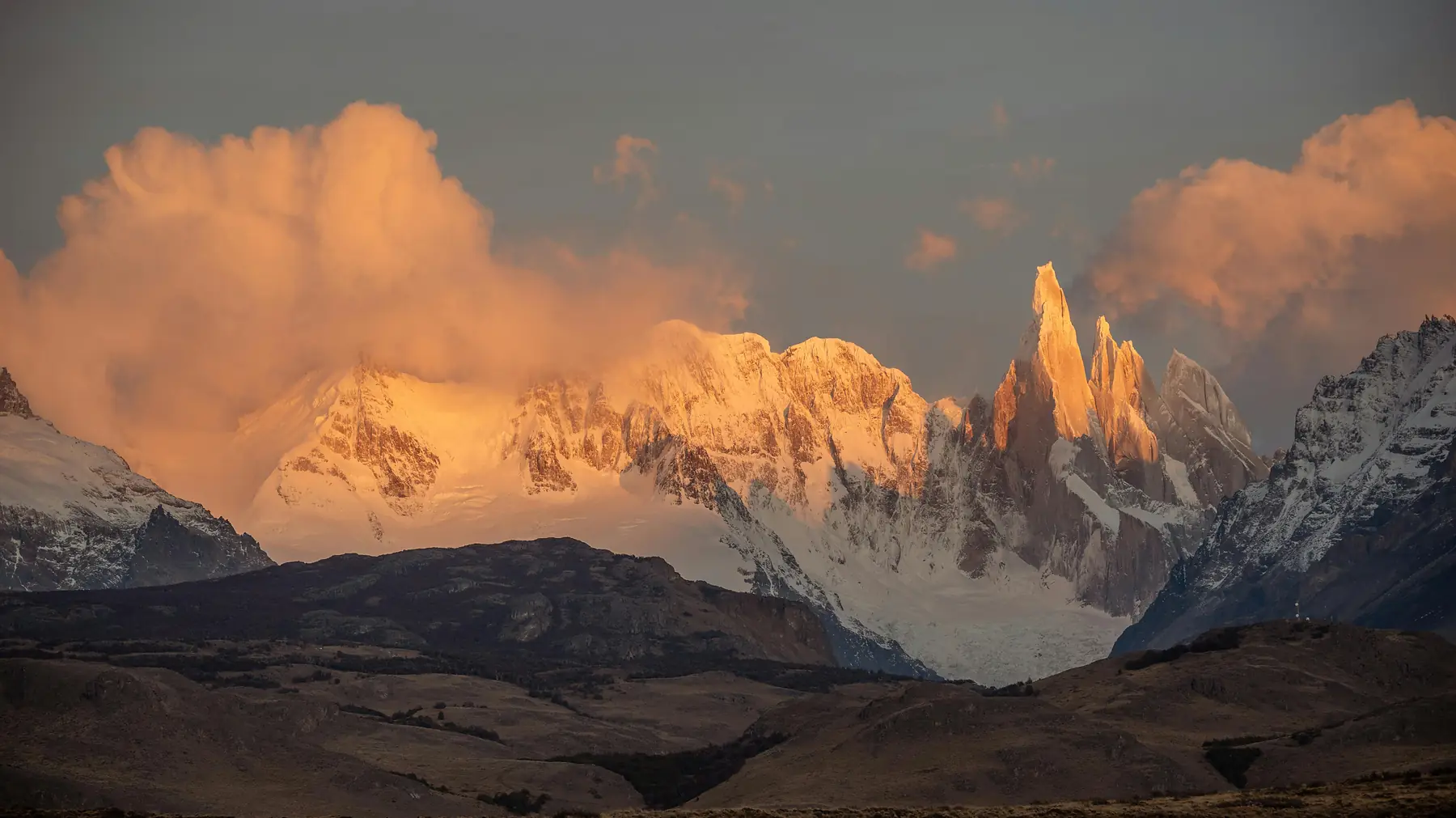
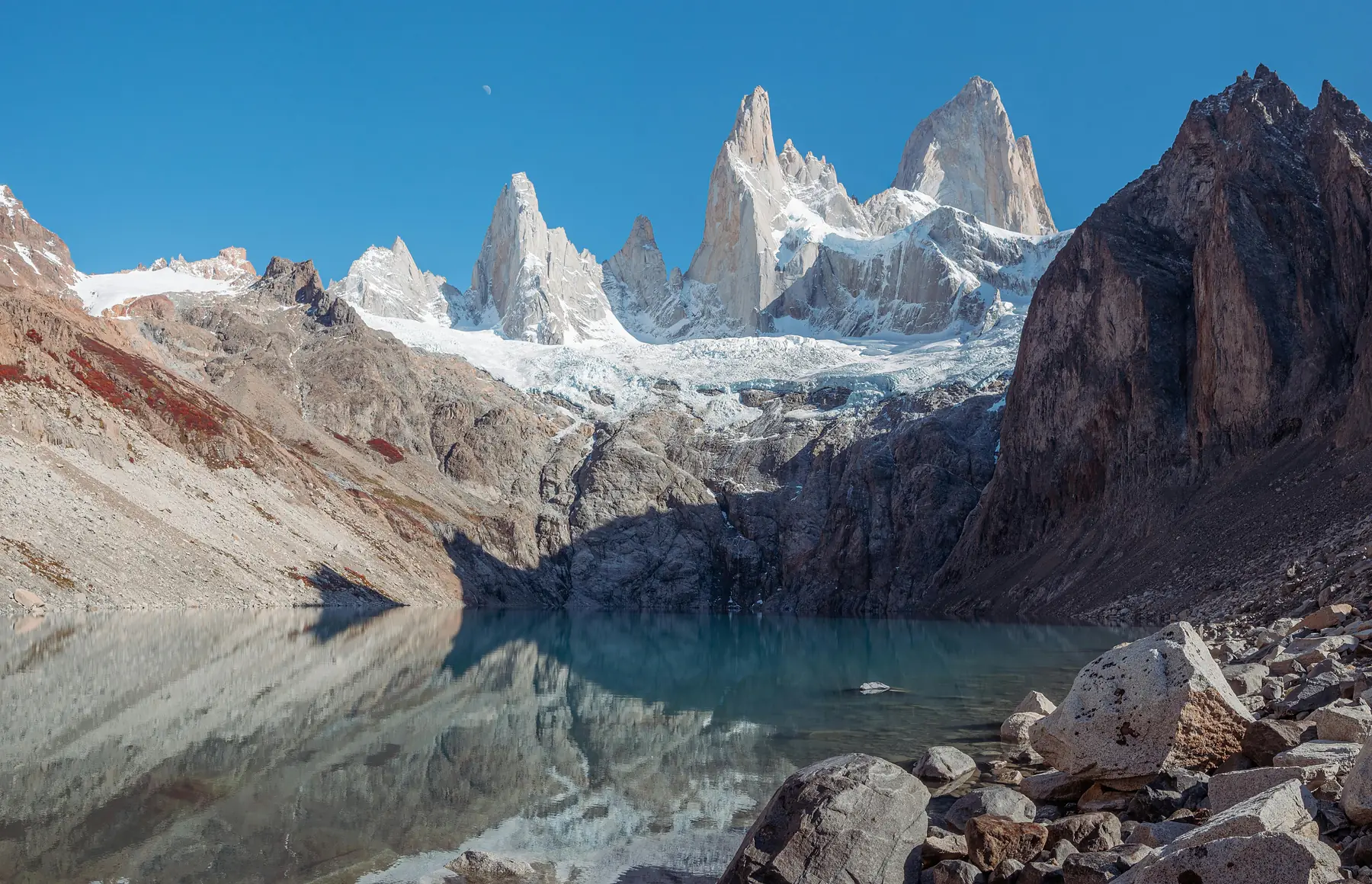
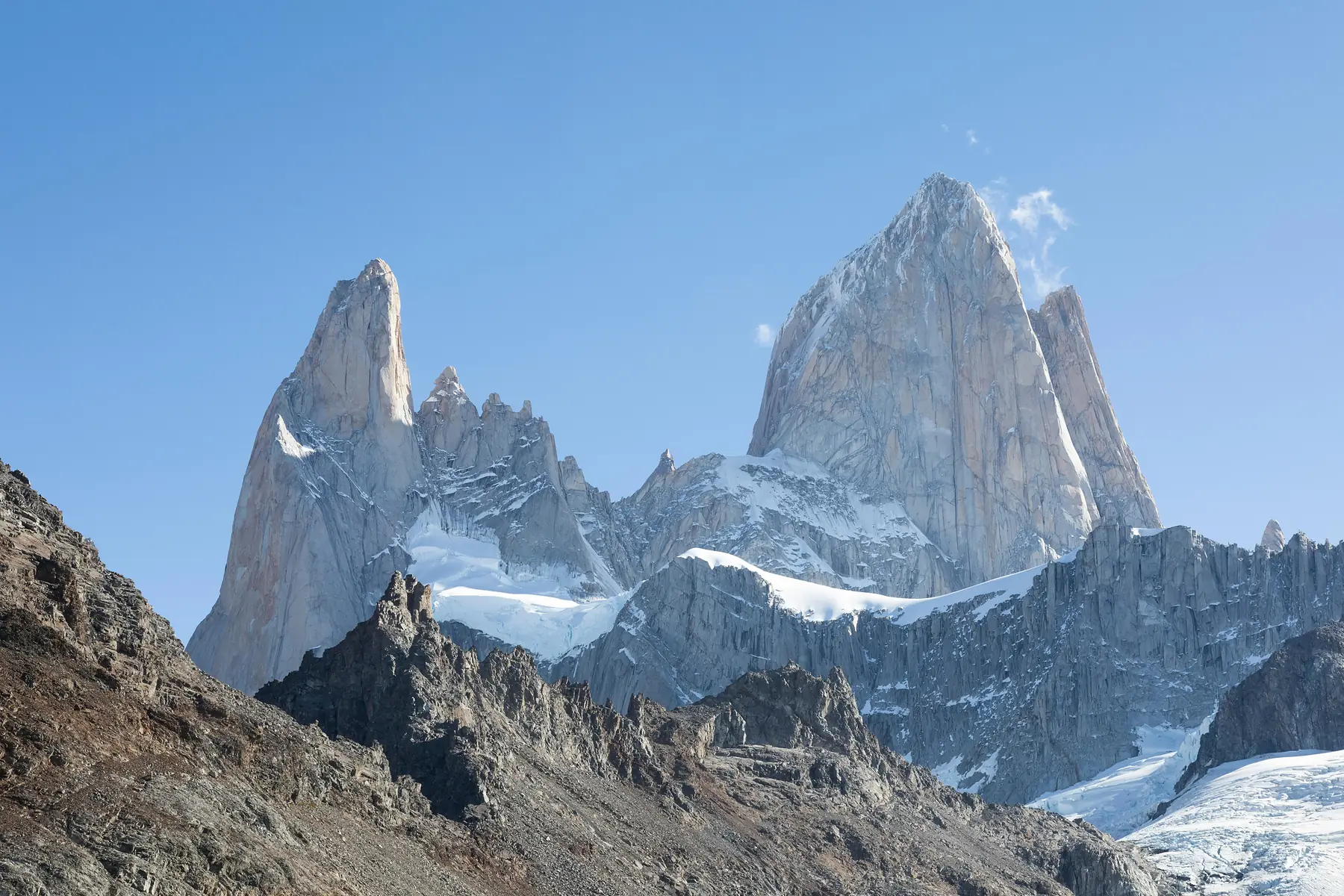
Patagonia offers a more “vertical” and ancient drama. The region is dominated by the southern tail of the Andes, where tectonic forces and glacial erosion have carved jagged granite teeth like Torres del Paine in Chile and Fitz Roy in Argentina. While Iceland is compact (roughly 103,000 km²), Patagonia is a behemoth covering approximately 1,043,000 km². This scale means the landscapes are more segregated, with the dense, emerald forests and fjords of the west, the high alpine peaks of the center, and the endless, yellow desert-steppe of the east.
The glacier experience also differs significantly. In Iceland, glaciers like Vatnajökull are often explored via guided lagoon boat tours or crampon walks on relatively stable ice tongues. In Patagonia’s Los Glaciares National Park, the focus is on the raw power of calving ice. The Perito Moreno Glacier is one of the few advancing glaciers on earth, and the sound of house-sized ice blocks crashing into the water is a sensory experience that Iceland’s more recessed glaciers rarely match.
Accessibility and Logistics: The “Ring Road” vs. The “End of the World”
Iceland is one of the most accessible wilderness destinations on earth for travelers from North America and Europe. A flight from New York to Reykjavik takes approximately 5.5 to 6 hours, while London is only 3 hours away. Once you land at Keflavik, the logistics are “turn-key.” You pick up a rental car and hit the Ring Road, a well-paved highway that circles the entire island. You can see the country’s greatest hits without ever needing a guide or complex permit.
Reaching Patagonia is a much larger undertaking, often referred to as traveling to the “End of the World.” Most travelers must fly into Santiago or Buenos Aires and then take a secondary 3-hour domestic flight to hubs like Punta Arenas or El Calafate. Total travel time from the US or Europe often exceeds 20 hours.
On the ground, Patagonia lacks the circular simplicity of Iceland. The region is bisected by the Andes and international borders, meaning you will likely rely on a mix of long-distance buses, domestic flights, and ferries. Getting to Patagonia requires a level of logistical foresight that Iceland does not, especially when crossing the border between Chile and Argentina, which involves strict customs checks and varying visa requirements.

Weather and Seasons: A Flipped Calendar
The most critical difference between these two regions is that their peak seasons are exact opposites. Iceland’s summer occurs during the Northern Hemisphere’s June, July, and August, featuring the “Midnight Sun” where the sun barely dips below the horizon. Patagonia’s peak season runs from November to March, offering long southern summer days that are perfect for trekking.
Both regions share a reputation for “four seasons in one day.” In Iceland, you should expect persistent mist, rain, and a damp cold that seeps into your layers. Patagonia, however, is defined by its wind. The “Roaring Forties” and “Furious Fifties” latitudes create sustained winds that can reach 60-80 km/h, strong enough to knock a hiker off balance.
A common question for travelers is whether they can see the Aurora in both locations. In Iceland, the Northern Lights (Aurora Borealis) are a primary winter draw from September to March. In Patagonia, the Southern Lights (Aurora Australis) do exist, but the landmass doesn’t extend far enough south for consistent viewing. Even in Ushuaia, the world’s southernmost city, sightings are exceptionally rare compared to the reliable displays in the Arctic.
To understand exactly when to time your visit to the south, explore our month-by-month guide.
When to plan your trip to the Southern Hemisphere
Hiking and Trekking: Laugavegur vs. The W Trek
For hikers, the choice depends on whether you prefer volcanic plateaus or alpine spires. Iceland’s premier multi-day route is the Laugavegur Trail, a 55km journey through neon-green moss mountains, obsidian lava fields, and steaming vents. The terrain is relatively rolling, and the challenge comes more from the exposed weather and river crossings than from steep vertical gain.
Patagonia is the global capital of high-alpine trekking. Routes like the W Trek in Torres del Paine or the O Circuit offer significant elevation challenges, taking you up into the heart of the granite towers and over high mountain passes like the John Gardner Pass. The infrastructure in Patagonia is world-class but concentrated; the “refugio” system allows hikers to stay in mountain dormitories with hot meals and wine, though these must be booked as soon as operator windows open (typically March–June for the following season).
- Terrain: Volcanic sand, moss, and rhyolite mountains vs Alpine forest, granite scree, and glaciers
- Difficulty: Moderate (mostly flat with some climbs) vs Challenging (significant daily elevation gain)
- Accommodation: Basic mountain huts (bring your own food) vs Full-service refugios or serviced campsites
- Booking Window: 4-6 months vs Book as soon as operator windows open (Mar–Jun)
Patagonia wins for dramatic mountain scenery, while Iceland wins for geological variety and 'alien' landscapes.
Cost Comparison: Is Patagonia Cheaper than Iceland?
Iceland is consistently ranked as one of the most expensive countries in the world for travelers. As of the 2026/27 season, a simple dinner for two in Reykjavik can easily exceed $100-120 USD, and a single beer often costs $10-15 USD depending on the venue. The main costs are food, alcohol, and car insurance, which is essential due to the risk of wind damage and gravel chips.
Patagonia is generally more affordable than Iceland, but it is not a “budget” destination in the way Southeast Asia or Peru might be. Chile is the most stable and expensive part of the region, while Argentina’s fluctuating currency can offer better value if you understand how to navigate the exchange rates. However, remote hubs like El Chaltén or Puerto Natales have higher prices than the capital cities due to the cost of transporting goods to the deep south.
For a granular look at how much to save for your southern adventure, see our full breakdown.
Managing your budget and currency in Argentina and Chile
Wildlife: Puffins vs. Penguins
If your goal is wildlife photography, the two regions offer very different “stars.” Iceland is the land of the Atlantic Puffin, which nests in the millions along cliffs like Látrabjarg. You can also see Arctic foxes, whales (Húsavík is the whale-watching capital of the north), and the sturdy, five-gaited Icelandic horse.
Patagonia’s wildlife feels more “frontier” and exotic. The guanaco (a wild relative of the llama) is ubiquitous on the plains, and the Andean condor, the world’s largest flying bird, is frequently seen circling the peaks. For many, the highlight is the Magellanic and King penguins found in massive colonies along the coast, or the elusive Puma, which can be tracked with specialist guides in Torres del Paine.
Food and Culture: Nordic Traditions vs. Gaucho Spirit
The cultural experience in Iceland is one of modern Nordic efficiency and quirky island traditions. Reykjavik is a high-tech, progressive city with a world-class coffee culture and a food scene that makes the most of fresh seafood and lamb. You might encounter “traditional” foods like fermented shark (hákarl), but the reality of modern Icelandic dining is sophisticated and expensive.
Patagonia is steeped in the “Gaucho” (cowboy) culture of the great estancias (ranches). The culinary highlight is the asado, a social ritual where a whole lamb (cordero al palo) is slow-roasted over an open fire for hours. Combined with Argentina’s world-famous Malbec wines and the rugged, hospitable spirit of the frontier, Patagonia offers a warmer, more rustic cultural experience than the sleek, modern vibe of Iceland.
If you want to know what to order at a local parrilla, read our guide to regional specialties.
What to eat and drink in Patagonia
Which is Right for You? (The Decision Matrix)
Still can’t decide? Use this quick matrix to find your match.
Choose Iceland if:
- You have only 7 to 10 days for your trip.
- You prefer driving yourself to highlights rather than hiking long distances.
- You are chasing the Northern Lights (September to March).
- You love volcanic geology, waterfalls, and “alien” landscapes.
- You don’t mind a higher daily spend for better infrastructure.
Choose Patagonia if:
- You have at least 14 days to explore.
- You are a serious trekker who wants to sleep in the shadow of granite peaks.
- You want to see massive calving glaciers and diverse wildlife like pumas and penguins.
- You love South American food, wine, and a “wild frontier” atmosphere.
- You are looking for a more remote, “off-the-grid” experience.
If you have already decided that the south is calling, your next step is deciding what to bring.
The Ultimate Patagonia Packing List
FAQ
Is Patagonia more expensive than Iceland? While both are premium destinations, Iceland is generally more expensive for food, alcohol, and daily logistics. Patagonia offers a wider range of prices, especially in Argentina where currency exchange can favor travelers.
Can you see the Northern Lights in Patagonia? No, the Northern Lights (Aurora Borealis) are only visible in the Northern Hemisphere. Patagonia occasionally sees the Southern Lights (Aurora Australis), but they are much rarer and harder to spot than the lights in Iceland.
Which is better for hiking, Patagonia or Iceland? Patagonia is widely considered superior for multi-day mountain trekking due to its iconic granite peaks and established routes like the W Trek. Iceland is better for shorter, day-hikes through volcanic landscapes and geothermal areas.
Is the weather worse in Iceland or Patagonia? Both regions have notoriously unpredictable weather. However, Patagonia is famous for its extreme, high-velocity winds that can impact hiking, while Iceland deals more with persistent rain and mist.
Do I need a car in Patagonia like in Iceland? A car is essential for the best Iceland experience, but in Patagonia, many travelers rely on a robust network of long-distance buses and domestic flights due to the immense distances and lack of connecting roads.
Are there penguins in Iceland? No, there are no penguins in Iceland; they are exclusive to the Southern Hemisphere. In Patagonia, you can find large colonies of Magellanic and King penguins along the coast.

