

Torres del Paine refugios provide dorm beds, meals and weather protection along the W Trek and part of the O Circuit. The right sequence depends on your route, hiking direction and availability across the park’s two operators.
Use the list below to understand each refugio’s role in a trek. Los Perros, Serón and several other O Circuit stops are camping sites rather than indoor refugios, so they belong in our separate Torres del Paine camping guide.
TLDR: Chileno is closest to the Base Torres approach; Central is the road-accessible start or finish; Cuernos and Francés cover the central W; Paine Grande connects the catamaran, French Valley and Grey; Grey is the glacier stop; and Dickson is the O Circuit’s northern indoor option.
Refugio inventory, meal plans and booking terms change by season. Build the complete night-by-night sequence across Las Torres Patagonia and Vértice before paying for non-refundable surrounding travel.
W Trek Refugios
Torre Central & Norte
The Central refugios are the easiest indoor stays to reach by road and work well before or after the Base Torres hike. They feel more like conventional hostels than remote mountain huts, but their transport access simplifies arrival and departure days.
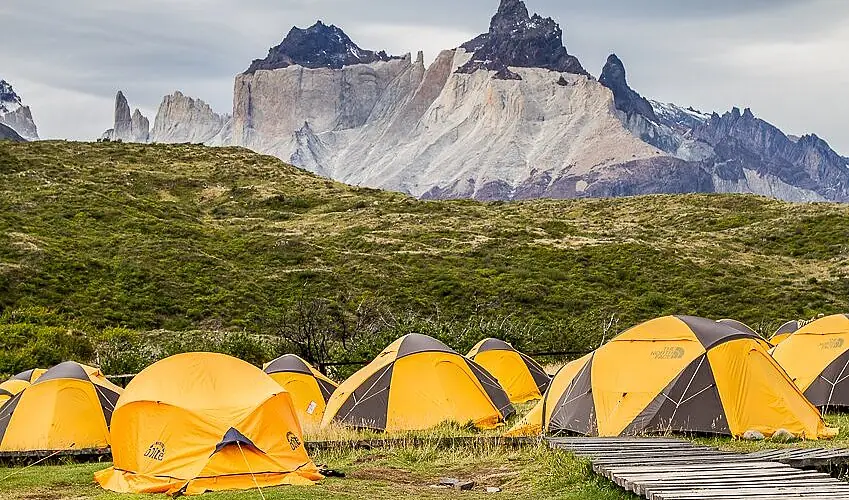
Refugio Chileno
Chileno shortens the early approach to Mirador Base Torres and is the strategic choice for a sunrise attempt. Its small inventory and narrow-valley position make it one of the hardest nights to fit into a route.
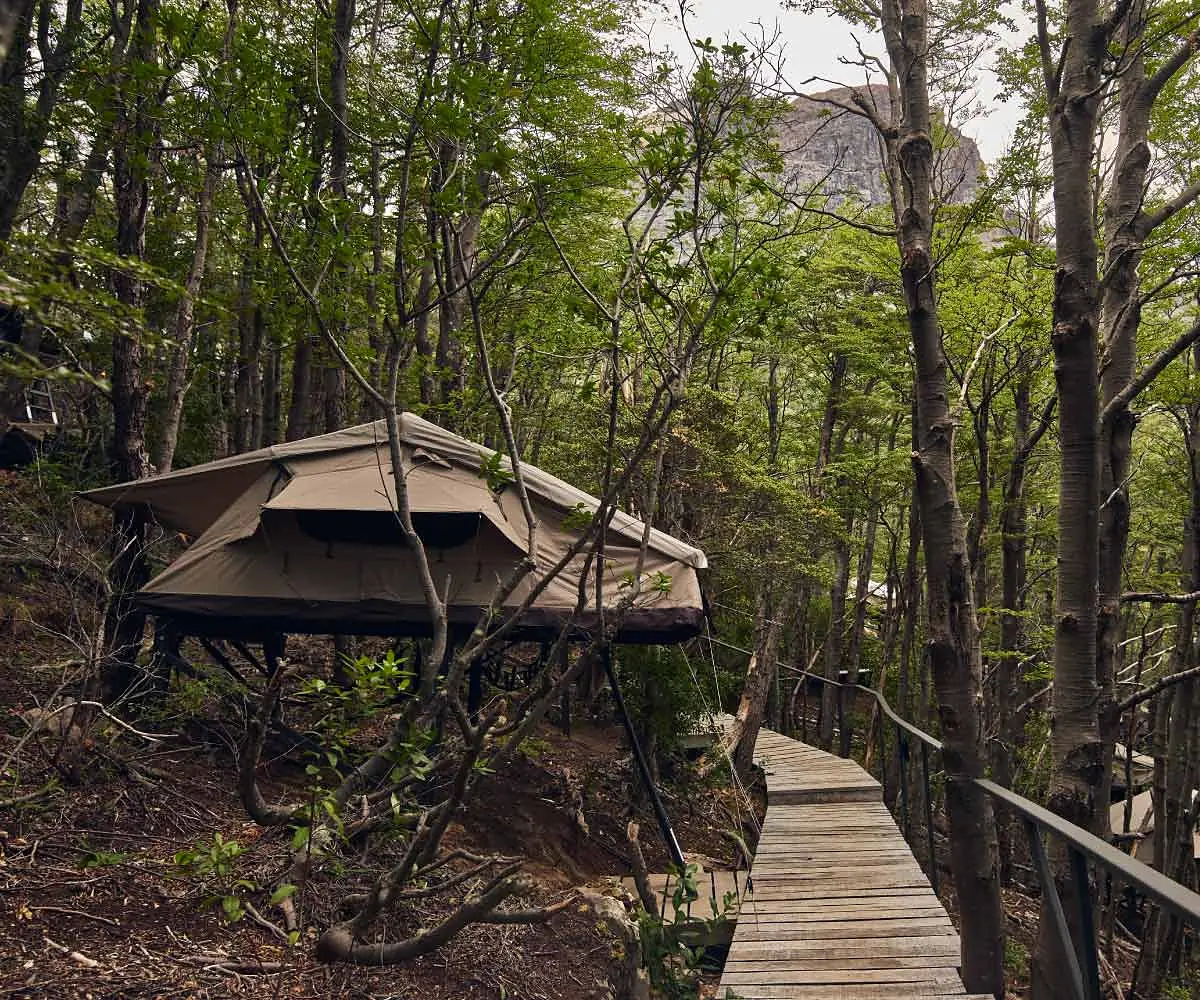
Refugio Los Cuernos
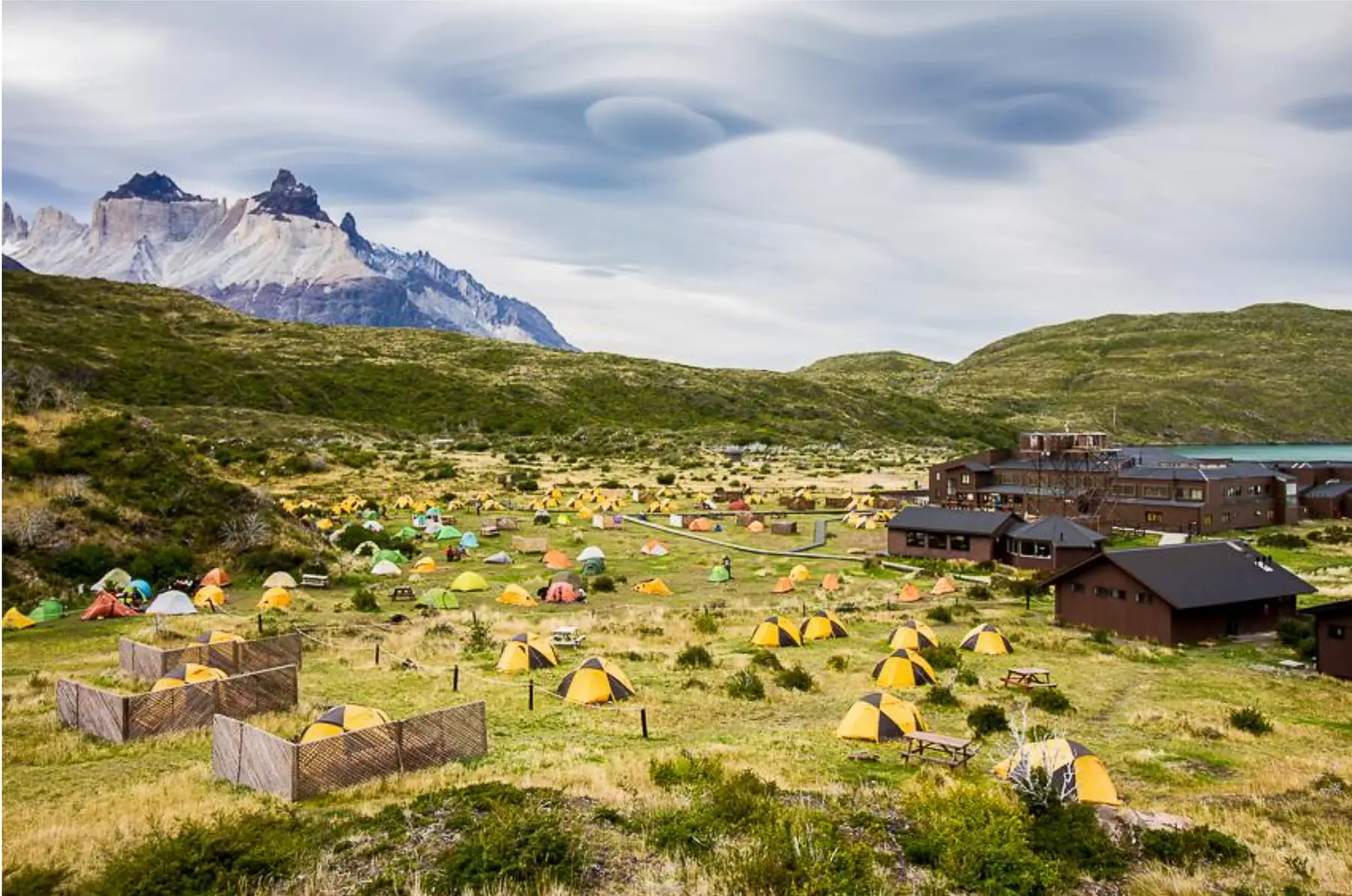
Cuernos sits beneath the park's horn-shaped peaks and breaks up the route between the eastern sector and French Valley. It offers dorms plus limited cabin-style upgrades, with details that should be checked against the current season.
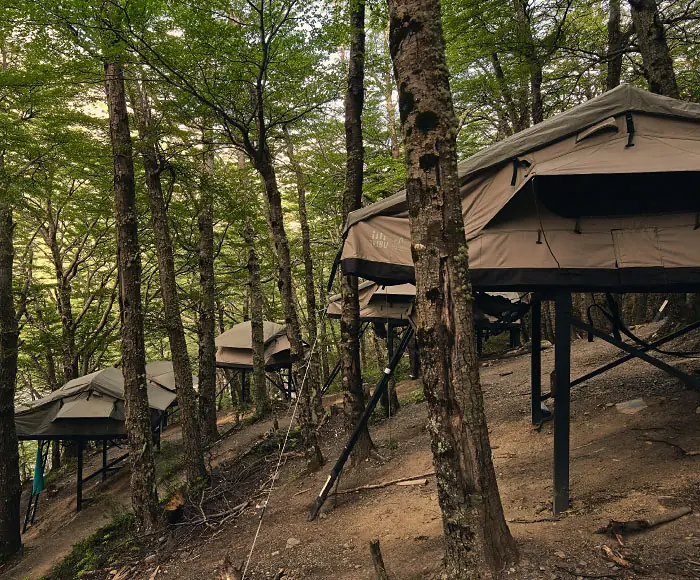
Francés Domes
The Francés domes sit close to the French Valley approach and suit itineraries that prioritize that central branch of the W. Sleeping is communal and the site is spread across a slope, so pack for stairs and shared space.
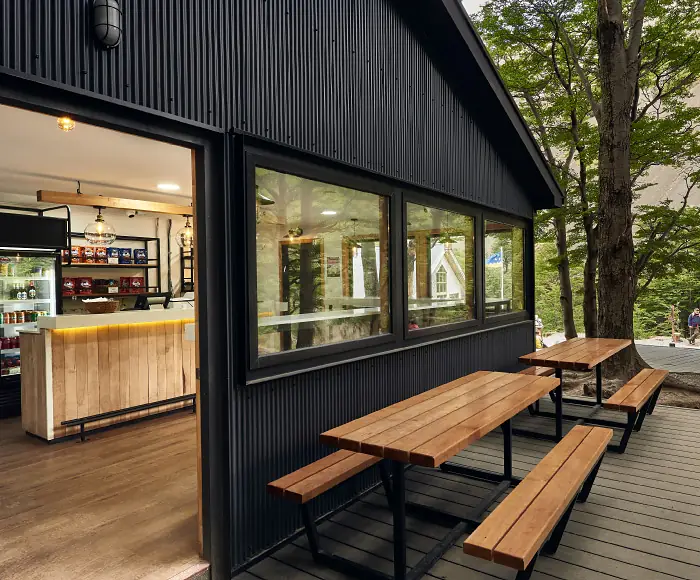
Refugio Paine Grande
Paine Grande is the park's major western junction, connecting the Pudeto catamaran with the routes toward French Valley and Grey. Its scale makes it practical and social, while the exposed setting is famously windy.
Refugio Grey
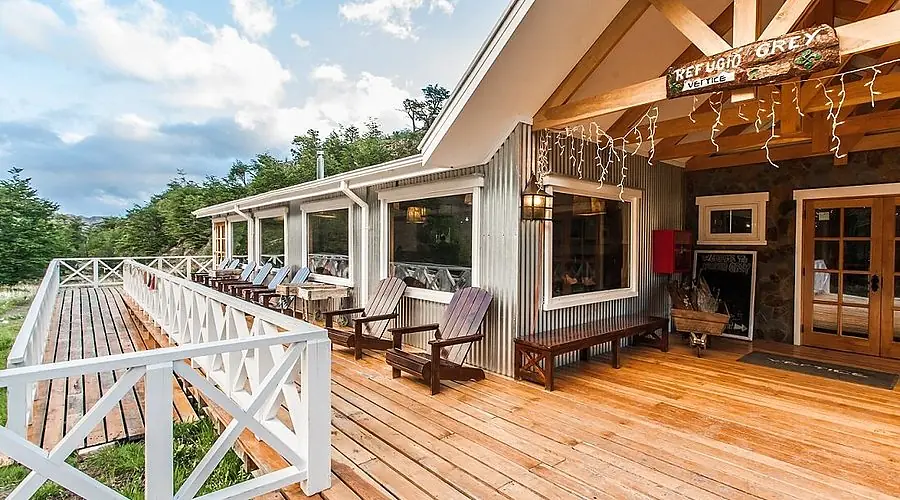
Grey is the indoor base for hikers extending toward the glacier, suspension bridges, kayaking or ice activities. Its forest position feels more sheltered than Paine Grande and works as a W Trek endpoint or turnaround.
O Circuit Refugios
Refugio Dickson
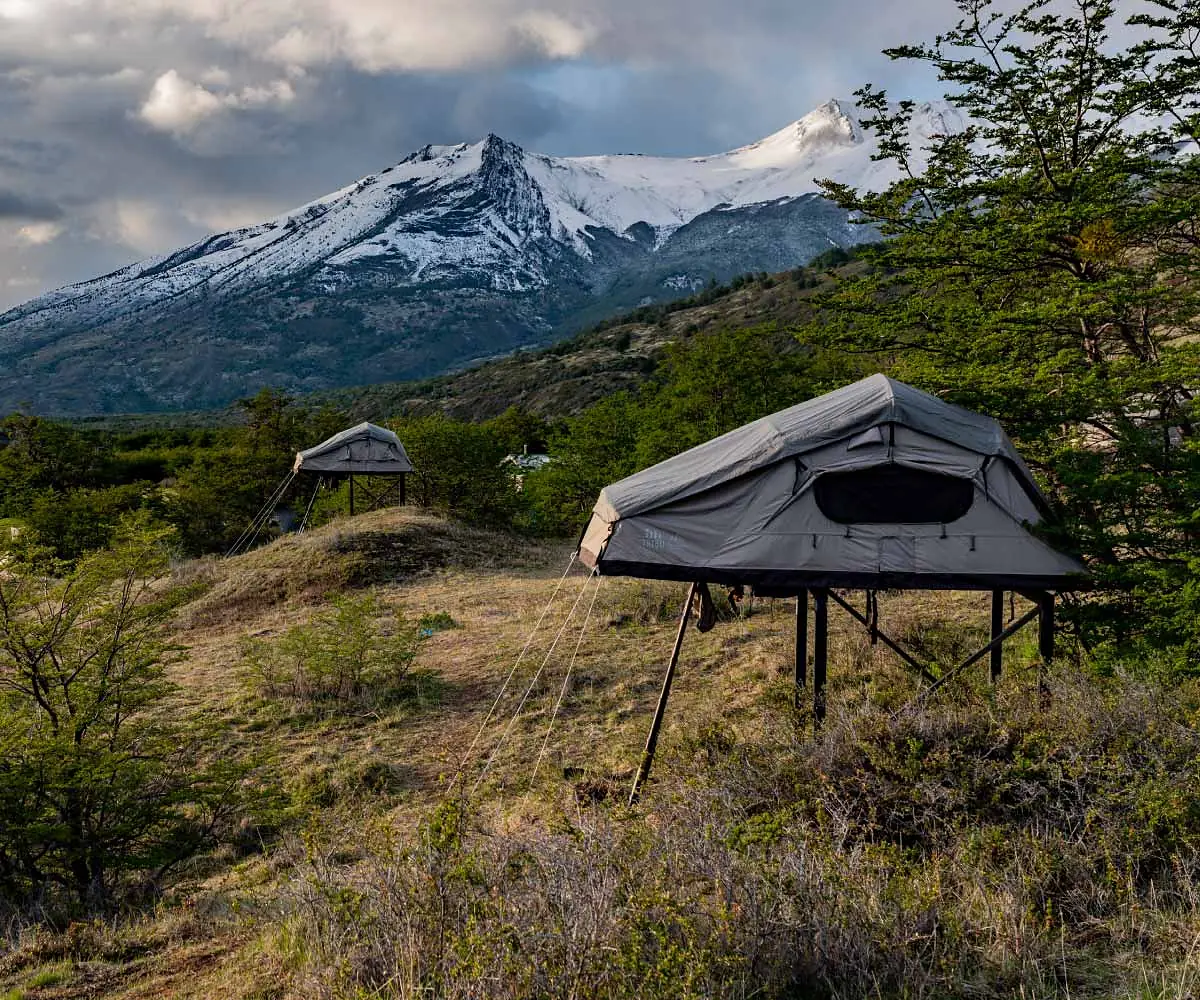
Dickson is the principal indoor refuge on the northern side of the O Circuit, set by the lake and glacier. It is only relevant to the full circuit and must align with the surrounding camping-only nights.
How the Torres del Paine Refugio System Works
Refugios at a Glance
- Accommodation Type: Shared dormitories (6-8 bunks)
- Primary Operators: Las Torres Patagonia and Vertice Patagonia
- Meal Options: Full board (breakfast, lunch, dinner) or self-catered
- Booking: Las Torres and Vértice use separate reservation systems
- Best For: Hikers prioritizing recovery, warmth, and lighter pack weights
- Availability: Check the complete route before committing to any individual night
What Exactly is a Torres del Paine Refugio?
A refugio is a high-altitude hostel designed for efficiency and communal living in a remote environment. While the word translates to “shelter,” these are far more sophisticated than the basic stone huts found in the Alps or the Appalachian Trail, featuring professional kitchens, bars, and hot showers.
The standard setup across all park refugios is the shared dormitory. Most rooms contain three to four sets of sturdy bunk beds, sleeping six to eight people. Space is tight, and you should expect to share your room with strangers of different genders, though the atmosphere is almost always one of mutual respect among tired hikers.
The “Full Board” concept is the hallmark of the refugio experience. When you book this option, your stay includes a bed with all linens (or a sleeping bag), breakfast, a packed box lunch for the trail, and a three-course dinner. This “mountain luxury” allows you to hike with nothing more than your clothes, water, and personal essentials.
Refugio vs. Camping: Which is Right for You?
Choosing between a refugio and a campsite is the most significant decision you will make when planning your Torres del Paine itinerary. The choice dictates your budget, your physical exertion levels, and how well you will recover from the 15-22km daily hikes.
Refugios offer a massive advantage in terms of sleep quality and protection from the elements. Patagonian weather is famously volatile, with sustained winds of 60-80 km/h and horizontal rain common even in mid-summer. Spending the night in a solid building rather than a flapping tent allows your body to actually rest. However, this comfort comes at a significant financial cost, as refugio beds are several times more expensive than a patch of dirt for a tent.
- Pack Weight: 5-8kg (light daypack) vs. 12-18kg (full trekking pack)
- Cost: Refugio beds and meal packages cost substantially more than a campsite; compare current operator rates
- Comfort: Bunk bed in a heated room vs. sleeping mat on the ground
- Booking: Refugio beds usually sell before basic tent sites, but both require a confirmed route
Choose a refugio if you have the budget and want to focus on the views rather than the gear. Choose camping for the classic wilderness experience and a significantly lower price tag.
If you decide that the cost of a refugio is too high but you still don’t want to carry a tent, many sites offer “Premium Camping” where a tent and mat are pre-set for you. You can find a full breakdown of these hybrid options in our Torres del Paine camping guide.

The Two Operators: Vertice Patagonia vs. Las Torres
Every refugio in the park is managed by one of two private companies: Las Torres Patagonia or Vertice Patagonia. Understanding the “Operator Split” is essential because you cannot book your entire trek in one place; you must coordinate dates across two separate reservation systems.
Las Torres Patagonia manages the eastern and central sections of the W Trek. This includes the high-traffic areas near the Base Towers and the French Valley. Vertice Patagonia manages the western side of the W (near Glacier Grey) and the remote northern sections of the O Circuit.
The booking systems for Vertice and Las Torres do not talk to each other. You must have both websites open simultaneously to ensure that if you book a bed at Refugio Chileno (Las Torres) for Tuesday, there is actually a bed available at Refugio Paine Grande (Vertice) for Wednesday.
To help you visualize where each company operates, the following table lists the refugios and their respective owners.
| Refugio Name | Operator | Trek Location |
|---|---|---|
| Torre Central | Las Torres | W Trek (East) |
| Torre Norte | Las Torres | W Trek (East) |
| Chileno | Las Torres | W Trek (East) |
| Los Cuernos | Las Torres | W Trek (Central) |
| Francés Domes | Las Torres | W Trek (Central) |
| Seron | Las Torres | O Circuit (East) |
| Paine Grande | Vertice | W Trek (West) |
| Grey | Vertice | W Trek (West) |
| Dickson | Vertice | O Circuit (North) |
| Los Perros | Vertice | O Circuit (North) |
For a visual guide to how these locations connect along the trails, see our Torres del Paine park map.
Refugios on the W Trek: East to West
The W Trek contains the most developed and frequently visited refugios in the park. Each has a distinct personality, ranging from the hotel-like atmosphere of Central to the rugged, wind-swept vibe of Paine Grande.
Refugio Torre Central & Norte
Located at the traditional trailhead, these are the largest and most accessible refugios. Because they are close to the park entrance and accessible by road, they feel less like backcountry huts and more like standard hostels. They serve as the primary base for hikers starting the trek or visiting Base Torres.
Refugio Chileno
Nestled in the Ascencio Valley, Chileno is the closest accommodation to Mirador Base Torres. Staying here allows a much shorter pre-sunrise approach than starting from the valley floor, so check this night first when building an east-to-west route.
Refugio Los Cuernos
Known for its spectacular location at the foot of the “Horns” (Los Cuernos), this refugio has a cozy, wood-heavy interior and a famous outdoor terrace. In addition to the standard dorms, Cuernos offers small private cabins with shared bathrooms, which are a popular upgrade for couples seeking a bit more privacy.
Domes el Francés
Located just a short distance from the entrance to the French Valley, this site features geodesic domes rather than a traditional building. Each dome houses eight people in bunks. The unique architecture provides a different feel, though the thin walls mean you will hear every gust of the Patagonian wind.
Refugio Paine Grande
Paine Grande is the main western junction and serves the catamaran crossing of Lake Pehoé. Its exposed position can be extremely windy, while the large dining and common areas make it one of the most social stops on the route.
Refugio Grey
Tucked into a forest near the edge of the Grey Glacier, this refugio feels modern and bright. It is the final (or first) stop on the W Trek and is the base for glacier trekking and kayaking excursions. The atmosphere here is often more relaxed, as hikers celebrate finishing the trek or prepare for the boat ride across Lake Grey.
Refugio Paine Grande and Refugio Grey are accessible by boat (the Pehoé Catamaran and the Grey III respectively). If you miss the final ferry of the day, you may be stranded. Always check the seasonal ferry schedule at the ranger station before starting your day’s hike.
Refugios on the O Circuit
The O Circuit (the full loop) is much more remote than the W, and the accommodation options reflect this. While the southern half of the loop uses the W refugios mentioned above, the northern section has only two locations with indoor beds.
Refugio Dickson is widely considered the most beautiful spot in the park. It sits on a grassy pedestal where the Dickson Glacier meets the lake, surrounded by towering peaks. It is small, quiet, and offers a true sense of isolation that you won’t find on the crowded W Trek.
Los Perros is a camping-only stop rather than an indoor refugio. Serón and other O Circuit sectors also require camping, which is why even hikers using refugios on the W need a mixed accommodation strategy for the full circuit. Confirm the current site status with the operator.
If you are planning to hike the full loop, you can find the specific logistics for these remote sections in our O Circuit planning guide.
What Facilities are Included?
While refugios are remote, they are surprisingly well-equipped. You should not expect luxury, but you can expect the essentials for hygiene and gear maintenance.
Bathrooms and Showers: All private refugios have gender-segregated bathrooms with flush toilets and hot showers. Note that the “afternoon rush” (between 4:00 PM and 7:00 PM) often exhausts the hot water supply. If you want a warm shower, try to arrive at the refugio early or wait until after dinner.
Electricity and Charging: Power availability and outlet locations vary by site and operating schedule. Bring a power bank and do not rely on overnight charging.
Connectivity: Service varies by site and can fail during poor weather. Treat all refugio Wi-Fi as non-essential and do not plan to work or depend on it for onward travel.
Storage: Most refugios provide lockers for guests. These are particularly useful at sites like Chileno or Francés, where you might want to leave your heavy pack while you hike a “spur” trail to a viewpoint. You must provide your own padlock.

Food and Dining in the Refugios
The food in Torres del Paine is designed for one thing: calories. Hikers on the W and O treks burn thousands of calories a day, and the set menus are portioned accordingly.
Breakfast and packed-lunch collection happen within operator-set windows that can affect an early start. Confirm meal times at check-in and collect anything needed for the next hiking day as instructed.
The park has a strict “Leave No Trace” policy. You must carry all trash from your box lunch out of the park or back to the next refugio. Never leave food scraps or wrappers on the trail, as this attracts invasive species.
Dinner service varies between buffet and set-menu formats. Confirm the assigned sitting and do not assume a late trail arrival can be accommodated.
Dietary Restrictions: Notify the operator of dietary requirements during booking and verify that the request is attached to every relevant night. Remote kitchens need advance notice and cannot reliably handle an unannounced request.
CONAF “Refugios” vs. Private Refugios
A common point of confusion for first-time visitors is the role of CONAF (Corporación Nacional Forestal), the Chilean government body that manages the park. CONAF operates several ranger stations and campsites, but they do not operate any refugios with indoor beds.
Sites like Campamento Paso or Campamento Italiano are CONAF-run. These offer basic camping platforms, pit toilets, and a ranger station, but there are no hostels, no hot showers, and no meal services. If your itinerary includes a night at a CONAF site, you must be prepared to camp and cook your own food.
Government-run sites and rest areas have separate rules from the private refugios. Check the current park guidance before relying on any historical campsite or booking process.
Booking Strategy and Timeline
Securing refugio beds is often harder than the hike itself. Because there are only a few hundred beds available in a park that receives thousands of visitors daily, the “6-Month Rule” is the standard for success.
Operator sales windows and inventory releases vary. Monitor both official systems, then secure the complete sequence as soon as your intended season is available.
If you find that your preferred dates are sold out, don’t panic. Cancellations do happen, and third-party aggregators sometimes hold blocks of beds that they release closer to the date. However, for the best chance of a seamless trip, plan your route early and book your Vertice and Las Torres stays in one sitting.
To see how these refugios fit into a day-by-day hiking plan, explore our detailed W Trek refugio itinerary.
FAQ
How much do Torres del Paine refugios cost? Rates depend on the operator, bed setup and meal package. Use the official Las Torres and Vértice booking systems for current totals, and compare a bed-only booking with the complete food and equipment cost.
Do I need to bring a sleeping bag to Torres del Paine refugios? No, if you book a “made-up bed” or “bed with linens,” all bedding is provided; however, if you book a “simple bed,” you must bring your own sleeping bag as only the mattress and pillow are provided.
Are there private rooms in the Torres del Paine refugios? Most refugios offer only shared dormitories, though Refugio Los Cuernos offers private two-person cabins (with shared bathrooms) and Refugio Paine Grande has a limited number of 2-4 person rooms that may be available for a premium.
Is there hot water for showers in Torres del Paine refugios? Yes, all private refugios in the park provide hot showers for guests, though it is best to shower early as hot water can run low during peak evening hours when everyone returns from the trail.
Can I buy food at the refugios without a reservation? Snacks and limited supplies may be sold on site, but full meals should be reserved with the accommodation. Do not rely on walk-in dinner availability.
Is Wi-Fi available at all Torres del Paine refugios? Connectivity and charging access vary by site and can be disrupted by weather. Download all route information in advance and treat any connection as a bonus.

