
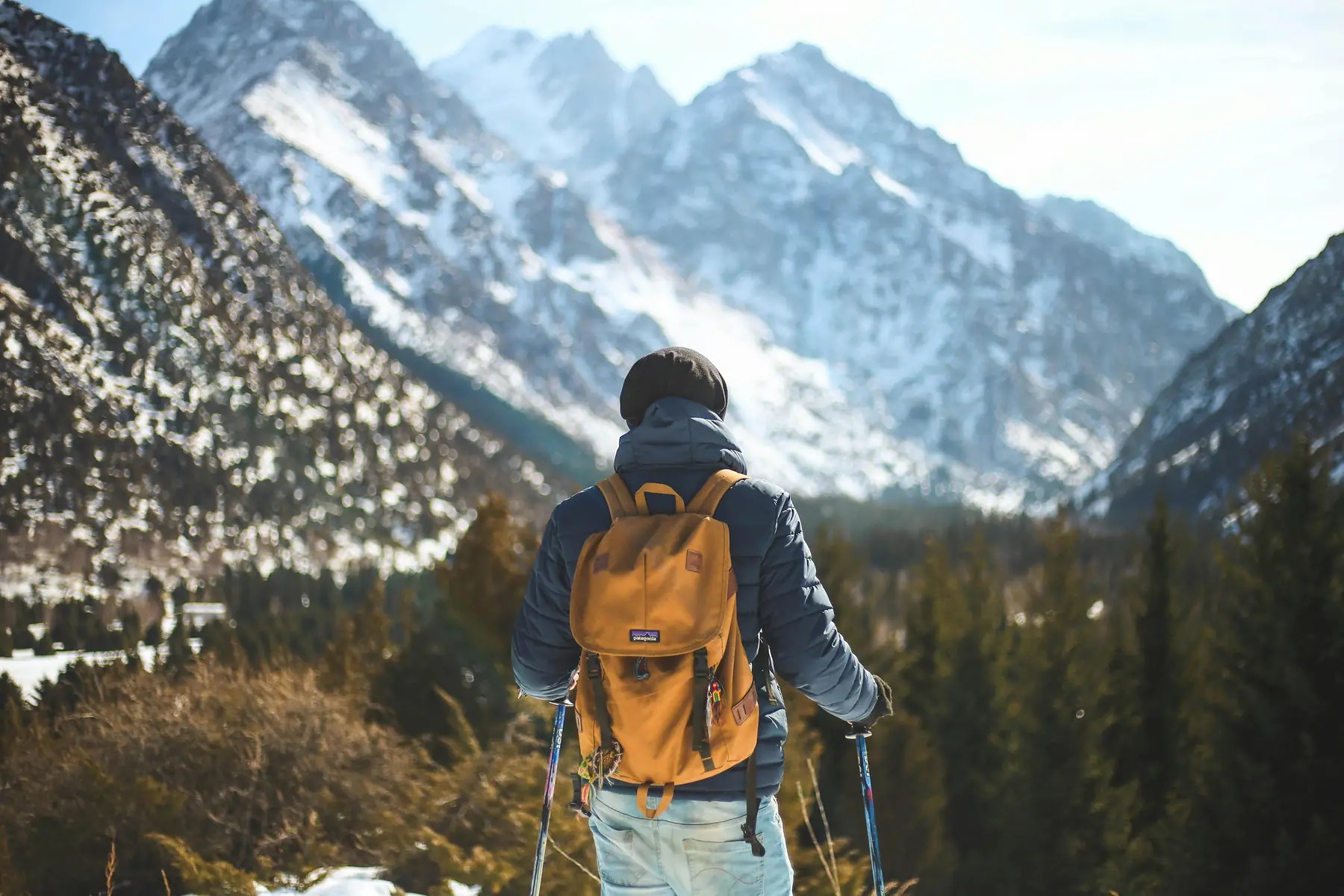
The best daypack for Patagonia is a close-fitting 22-25L hiking pack with a supportive hipbelt, secure side pockets, and enough room for a waterproof shell, warm layer, lunch, water, and emergency gear. Our top overall pick is the Rab Nitron 25 because its low weight and stable carry suit long, windy days without adding unnecessary structure.
Pack size still depends on the trip. A 20-25L daypack works for classic out-and-back hikes from El Chaltén, Puerto Natales, Bariloche, and Ushuaia. For a full refugio-to-refugio W Trek, most hikers should move up to 30-35L so several days of clothing and toiletries do not crowd out storm layers. This guide focuses on technical daypacks and light full-board trekking, not packs for carrying a tent or sleeping system.
At a Glance: Best Daypacks for Patagonia
- Top Overall Pick: Rab Nitron 25
- Top Budget Pick: Quechua MH500 22L
- Top W Trek Pick: Osprey Talon 22 or women-specific Tempest 22
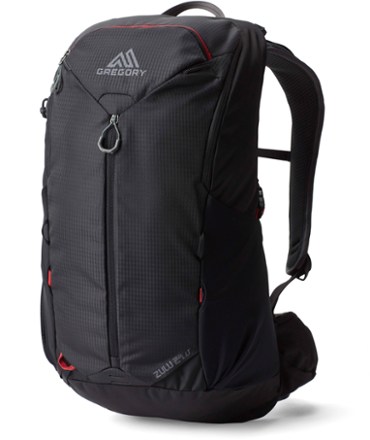
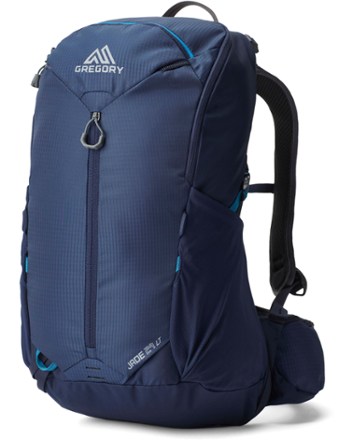
- Top Ventilation Pick: Gregory Zulu 24 LT or women-specific Jade 24 LT
- Recommended Features: 20-25L for day hikes, a close and stable back system, a supportive hipbelt, secure bottle pockets, trekking-pole attachment, and an internal waterproof liner
Recommended Daypacks for Patagonia
The price markers compare each model with the rest of this category: $ budget, $$ mid-range and $$$ premium. Fit matters more than the logo. Load the pack with the weight you expect to carry and check that the hipbelt stays on your hip bones while you walk, turn, and reach overhead.
Quechua MH500 22L Lightweight Hiking Backpack
A low-cost technical daypack with more structure than a simple travel backpack. Its suspended back, padded hipbelt and included rain cover make it capable enough for long days in El Chaltén or Torres del Paine. The suspension and finish feel less refined than the premium packs, but this is the strongest entry-level option in the group.

Rab Nitron 25
Our top overall pick keeps its load close through rough ground and exposed wind while weighing about 640g. The 25L capacity is practical for a long day with spare layers, food and safety gear, and the running-influenced harness limits bounce. Its close back panel runs warmer than suspended-mesh designs, and the fit offers less adjustment than heavier packs.

Patagonia Terravia Pack 22L
A streamlined daypack with two torso sizes, a supported back panel, restrained organization and an integrated rain cover. It works well as a general Patagonia hiking pack or as a compact companion when your main trekking bag travels separately. Its ventilation is less pronounced than a suspended-frame design, and the price sits above the value options.

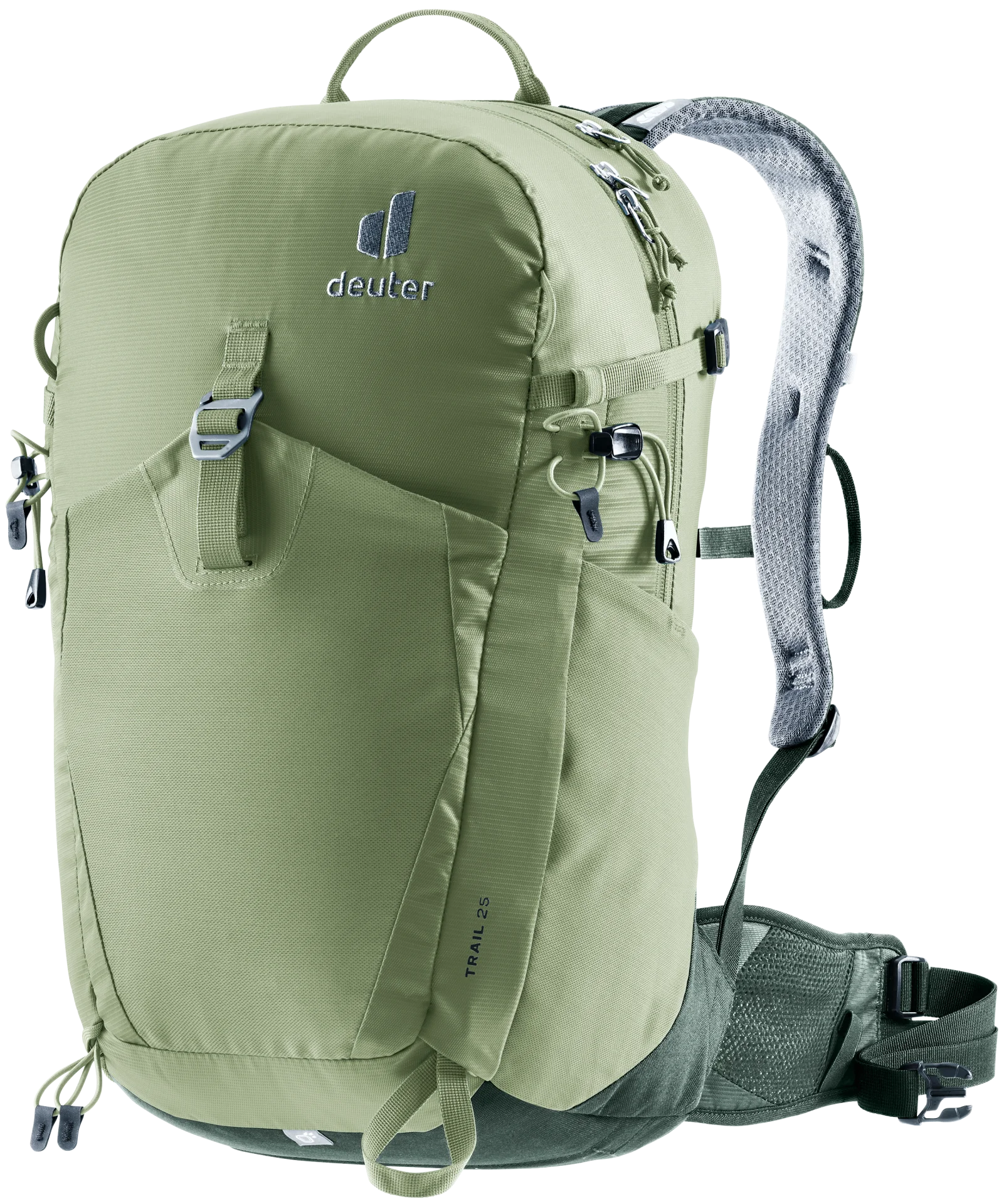
Deuter Trail 25
A structured pack that keeps its load controlled on steep, rocky trails. The flexible U-frame, supportive hip fins and panel-style access make it easier to carry and organize dense loads than a minimalist summit bag. Its current official capacity is 24L despite the Trail 25 name, and the robust build is heavy for this size.
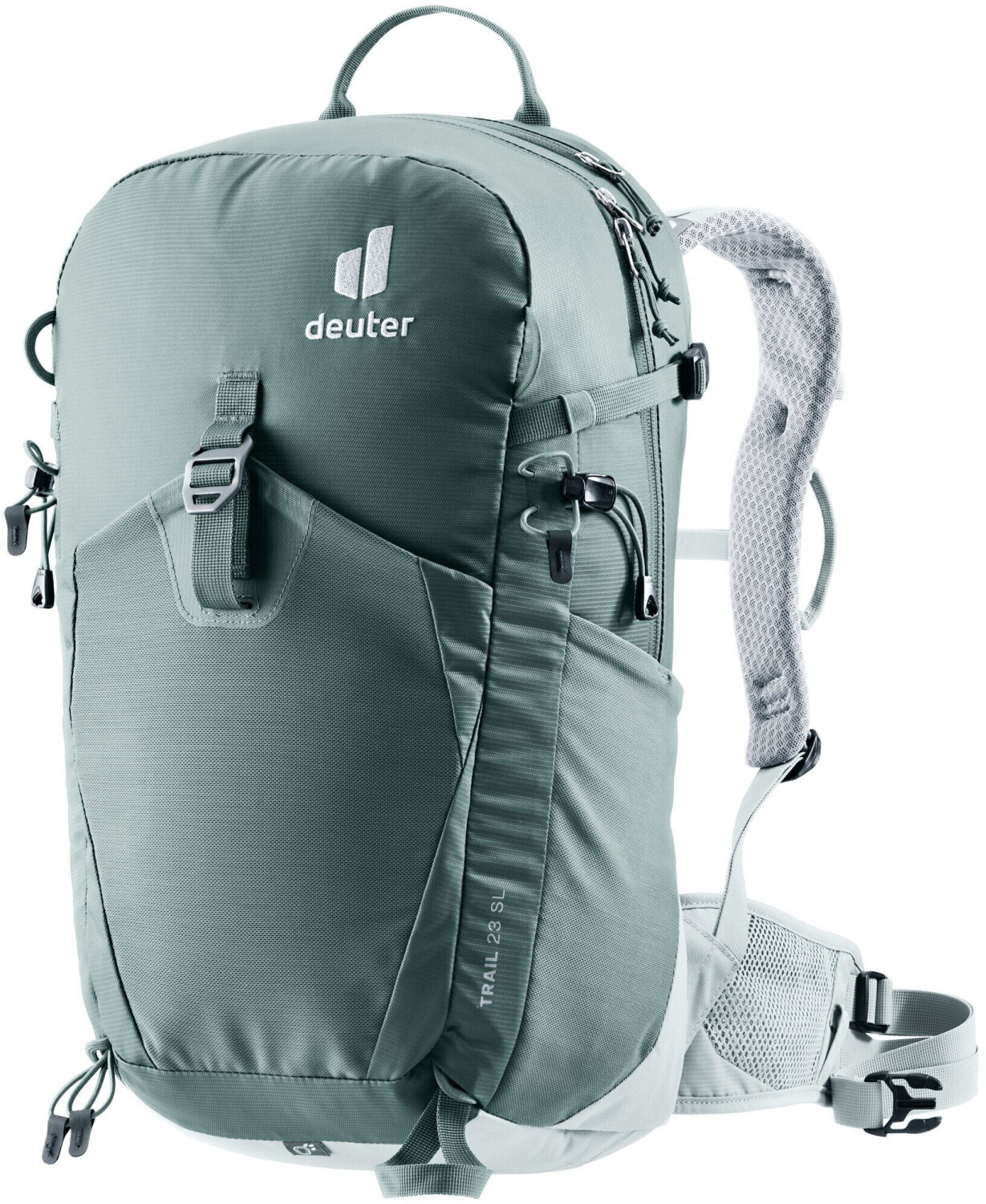
Deuter Trail 23 SL
Deuter's SL geometry shortens the back and reshapes the harness, giving smaller-framed hikers a genuine fit alternative to the standard Trail. The frame and close carry suit steep ascents, scrambling and awkward descents where pack movement becomes tiring. Its structured build weighs more than simpler women-specific daypacks.
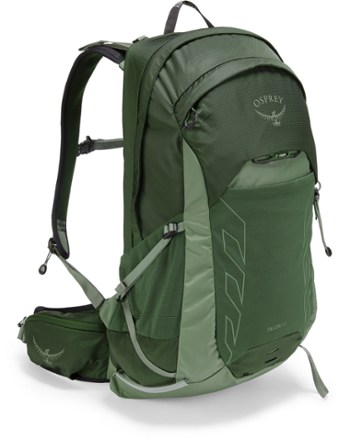
Osprey Talon 22
A highly adjustable technical daypack whose close AirScape panel and wraparound harness keep layers, water and camera gear controlled as the terrain steepens. It is our men's pick for full-day hikes and light refugio use when 22L is enough. The premium price and extensive feature set are unnecessary for short walks.
Osprey Tempest 22
The women-specific counterpart to the Talon combines adjustable torso length with reshaped shoulder straps and hipbelt geometry. It is a strong choice for long day hikes with several layers, food and camera gear, and it can cover a tightly packed full-board W Trek. It remains expensive and feature-heavy for casual sightseeing.

Gregory Zulu 24 LT
A supportive framed daypack whose suspended back creates airflow between the pack and your shirt. The adjustable torso, hipbelt and perimeter frame handle water, layers and photography gear comfortably on warm, exposed climbs. The curved suspension reduces usable interior space and makes packing less straightforward.
Gregory Jade 24 LT
A women-specific suspended daypack for hikers who want stronger airflow and load support than a frameless model provides. The shaped harness and adjustable torso help stabilize dense day-hike loads without pressing the bag against your back. That suspension adds weight and gives the main compartment a less efficient curved shape.
Rab Protium ND25
A supportive narrow-dimensions pack for smaller frames and technical all-day use. The 25L body, fitted harness, organization and included rain cover work well when spare layers and equipment exceed a minimalist load. It is heavier and more expensive than the unisex Nitron, so choose it when the closer fit and added support justify the weight.

How We Chose These Patagonia Daypacks
We compared current daypacks that were available from their manufacturers in August 2026. Every recommendation had to provide a technical hiking fit, enough capacity for a real Patagonia day-hike load, and a clear advantage in value, stability, ventilation, organization, or fit. We excluded casual travel backpacks with thin shoulder straps and no useful hipbelt because they become uncomfortable once water, food, and several weather layers are inside.
The ranking gives more weight to fit and load control than to the longest feature list. A light pack that moves with your torso is easier to manage on exposed trail than a heavier bag covered in pockets. We also favor models sold across multiple regions because replacing a pack or checking its fit before an international trip should be practical.
Product specifications and availability can change by country. Use the brand links above to confirm the current capacity, torso sizing, color, and included accessories before buying.
What Size Daypack Do You Need for Patagonia?
For most Patagonia day hikes, 20-25L is the useful range. It gives you space for a waterproof jacket, insulation, hat, gloves, lunch, water, first-aid supplies, sun protection, and a small camera without leaving so much empty room that the load shifts in the wind.
A 15-20L pack works for short walks near town or as a secondary summit bag carried inside a larger trekking backpack. Capacity becomes tight on full days such as Laguna de los Tres or Base Torres, especially when a cold forecast calls for extra insulation. A 26-30L pack gives photographers, winter hikers, and parents more flexibility, though careful compression matters when the bag is partly empty.
- Best Use: Hotel-based day hikes / Refugio-to-refugio trekking
- Typical Load: Layers, lunch, water, safety kit / Several days of clothing, toiletries and personal gear
- Main Advantage: Compact and stable in wind / Enough room without moving to a full expedition pack
- Main Risk: Easy to overstuff / Easy to overpack
Choose 20-25L for single-day hikes. Move to 30-35L for a full-board W Trek with several days of personal gear.
If you will carry a sleeping bag, tent, stove, or several days of food, start with our guide to the best backpacks for Patagonia. A daypack is the wrong tool for a camping load, even when everything can be forced inside.
Best Daypack for the W Trek
The words “W Trek daypack” can describe two different jobs. Full-board hikers who sleep and eat in refugios still carry several days of clothing, toiletries, electronics, and weather protection between accommodations. A 30-35L pack is the safer default for that trip. Disciplined packers can use the Osprey Talon 22, Tempest 22, or Quechua MH500 22L when bedding and meals are supplied, but test-pack the complete kit before leaving home.
Campers need a 50-65L trekking pack for their overnight equipment. A small packable daypack can ride inside it for out-and-back sections such as the French Valley, where hikers commonly leave their main load at the designated pack area and carry valuables, layers, water, and food uphill.
On either approach, keep your passport, money, phone, and other valuables with you when leaving a larger bag. Our W Trek packing list explains how the load changes between full-board, refugio, and camping itineraries.

Wind Stability Matters More Than Empty Weight
Patagonia rewards a tidy pack. A tall bag that sits away from your back gives crosswinds more leverage, while loose straps and unsecured bottles can whip around or disappear down the trail. Look for a back panel that holds the load close, compression straps that remove unused volume, and a sternum strap that prevents the shoulder harness from spreading.
Suspended-mesh packs such as the Quechua MH500 and Gregory Zulu or Jade create welcome airflow, but they also hold the load farther from your body. Close-back designs such as the Rab Nitron, Osprey Talon or Tempest, and Deuter Trail feel more connected during quick direction changes. The better choice depends on whether you prioritize ventilation or a compact carry.
Do not choose by pack weight alone. A supportive one-kilogram pack can feel better late in the day than a 600g model whose harness does not match your torso. Load transfer and fit decide comfort once two liters of water and a camera are added.
Hipbelts, Back Panels, and Women-Specific Fit
A daypack hipbelt does not need the padding of an expedition rucksack, but it should stop the bag bouncing and transfer part of the load onto your hips. Thin webbing straps are adequate for light town walks. For an all-day mountain route, shaped hip fins are more comfortable and often add useful snack pockets.
Women-specific packs can change torso length, shoulder-strap shape, strap spacing, and hipbelt angle. Those are meaningful differences, which is why the Deuter Trail 23 SL, Osprey Tempest 22, Gregory Jade 24 LT, and Rab Protium ND25 have separate recommendations. They are worth trying when a standard unisex pack sits too low, rubs the neck, or leaves a gap behind the shoulders.
Measure from the prominent vertebra at the base of your neck to the line across the top of your hip bones, then compare that length with the manufacturer’s current sizing chart. Try the pack with weight. The hipbelt should remain centered over the hip bones, and the shoulder straps should follow your back without pinching or lifting away.
Waterproofing Your Daypack
Few hiking daypacks are fully waterproof. Coated fabric and covered zippers slow water, while prolonged wind-driven rain eventually finds seams and openings. An external rain cover helps in calmer conditions, but strong gusts can lift it or push rain between the cover and back panel.
Use a waterproof liner inside the main compartment and place your phone, passport, spare insulation, and first-aid supplies in separate sealed bags. This system keeps critical items dry even if the outer fabric becomes saturated. It also lets you open one small bag without exposing everything else to rain.
Pack your waterproof shell where you can reach it without emptying the main compartment. A front stretch pocket, top pocket, or panel opening saves time when rain arrives halfway across an exposed section.
Pockets and Trail Access
Good organization reduces stops and keeps loose gear under control. You should be able to reach water, snacks, sunscreen, gloves, and a phone without unpacking the bag. Deep side pockets with compression straps are safer than shallow bottle sleeves, and a large front pocket is useful for a wet shell.
Check the trekking-pole attachment before buying if you use poles only on steep sections. Compact folding poles fit almost any daypack, while telescoping poles need secure upper and lower anchor points. Our trekking pole guide compares the formats for Patagonia trails.
Hydration reservoirs keep water easy to reach but make the remaining volume harder to judge and can leak inside the pack. Bottles are simpler to refill and monitor. Either system works if you can access it without setting loose layers on the ground in strong wind.
Daypack or Travel Backpack?
A travel backpack prioritizes airports, laptops, and rectangular packing. A hiking daypack prioritizes movement, ventilation, water access, and load stability. The difference becomes obvious on a long descent, where a laptop sleeve does little to stop a dense load pulling on your shoulders.
The Patagonia Black Hole and similar travel packs are useful for buses, flights, and town days. Choose one of the technical models above for full-day hikes. If you want a single bag for travel and occasional short walks, the Patagonia Terravia 22L offers the cleanest crossover in this group, though its curved hiking shape is less efficient for packing clothes than a rectangular travel bag.
What to Pack in a Patagonia Daypack
The pack and its contents should be planned together. Carry a waterproof shell, insulating layer, hat, gloves, food, water, sun protection, offline navigation, a small first-aid kit, and an emergency light even when the forecast begins clear. Keep the load compact and leave space for layers removed during a climb.
Our Patagonia day-hike packing list gives a complete checklist and explains how to adjust it by route and season. Lay everything out before choosing a capacity. Buying a bag first often leads to a larger pack and more gear than the hike requires.
FAQ
QUESTION: What size daypack is best for Patagonia? ANSWER: A 20-25L technical daypack is best for most full-day Patagonia hikes. Choose 26-30L for winter layers, substantial camera equipment, or family gear, and 30-35L for a full refugio-to-refugio W Trek.
QUESTION: Is a 20L backpack big enough for Patagonia day hikes? ANSWER: Yes, for an experienced and disciplined packer on a summer day hike. A 22-25L model gives most travelers more useful space for changing weather layers without becoming bulky.
QUESTION: Can I hike the W Trek with a daypack? ANSWER: Yes, if you book accommodation, bedding, and meals and keep your personal kit compact. Most full-board hikers will find 30-35L more practical, while campers need a larger trekking pack for shelter, sleep equipment, and food.
QUESTION: Does a Patagonia daypack need a hipbelt? ANSWER: A supportive hipbelt is worthwhile for long hikes because it limits bounce and moves part of the load away from your shoulders. A simple webbing belt is adequate only for very light loads and short walks.
QUESTION: Do I need a waterproof daypack for Patagonia? ANSWER: You need a reliable waterproof packing system. Use an internal liner and sealed bags for critical items because water can enter through seams and zippers even when a pack uses water-resistant fabric or an external cover.
QUESTION: Is the Patagonia Black Hole backpack good for hiking? ANSWER: It is useful for travel and short walks, but its organization and harness are designed more for everyday carry than long mountain days. A technical hiking daypack such as the Terravia, Nitron, Talon, or Tempest will carry trail weight more comfortably.
QUESTION: Should I choose a ventilated or close-fitting back panel? ANSWER: Choose suspended mesh if you run hot and value airflow. Choose a close-fitting panel if stable movement in wind and rough terrain is the priority. Correct fit matters more than either design in isolation.

